Tatiana Acero-Cuellar
she/her/ella
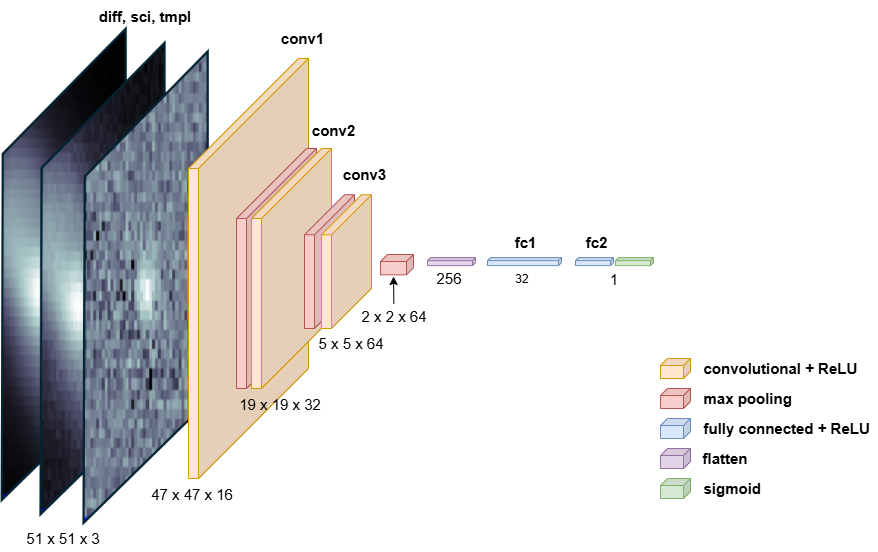
I'm developing the Real-Bogus (a.k.a. the reliability) model for the Vera C. Rubin Observatory. I have already delivered three versions of the model, which are reported in the technical note [DMTN-337](https://dmtn-337.lsst.io/)(and a paper is coming up soon!). A version of the model was deployed to assign the reliability score for all detections in the [Data Preview 1](https://dp1.lsst.io/) data and [Data Preview 2 data](https://dp2.lsst.io/). The last and current version of the models is being deployed for the generation of the LSST-alert data. The machine learning reliability model for Rubin is a light Convolutional Neural Network (CNN) that assigns each detected source a reliability score in [0,1], where 1 indicates a real astrophysical source, and 0 indicates an artifact.
Before joining Rubin, I developed a Real-Bogus model using autoscan dataset (from the Dark Energy Survey), where I compared the performance of the classifier when training with the template, science, and difference image, and only with the template and the science.
Distinguising between real and bogus astrophysical objects can be more challenging than just a binary classification. I created an informative latent space of autoscan dataset using a contrastive learning technique called Boostrap Your Own Latent (BYOL). The plot is generated by reducing that latent space to a 2D space with UMAP. Similar things are closer in this space.
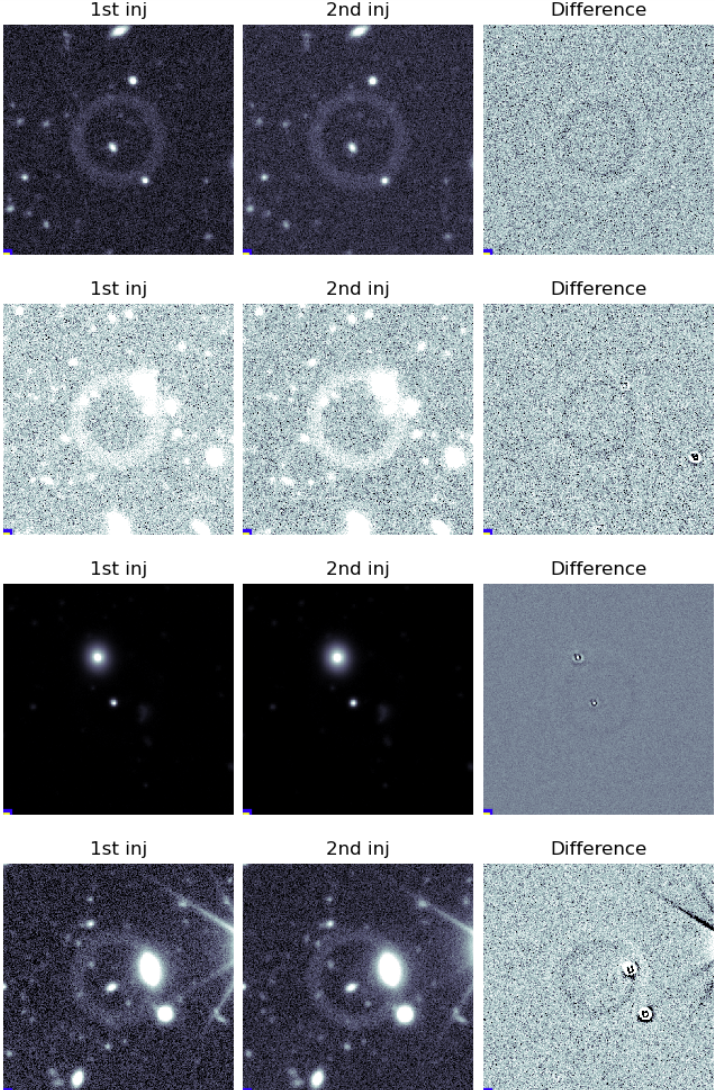
Feed-Forward simulation of Light Echoes. I am generating a simulated data set of Light Echoes images using the physics principles behind their formation, and observed properties of the dust medium. Light Echoes are detected on difference images, I am using the LSST Science Pipelines to inject the Light Echo simulations and perfom Difference Image Analysis.
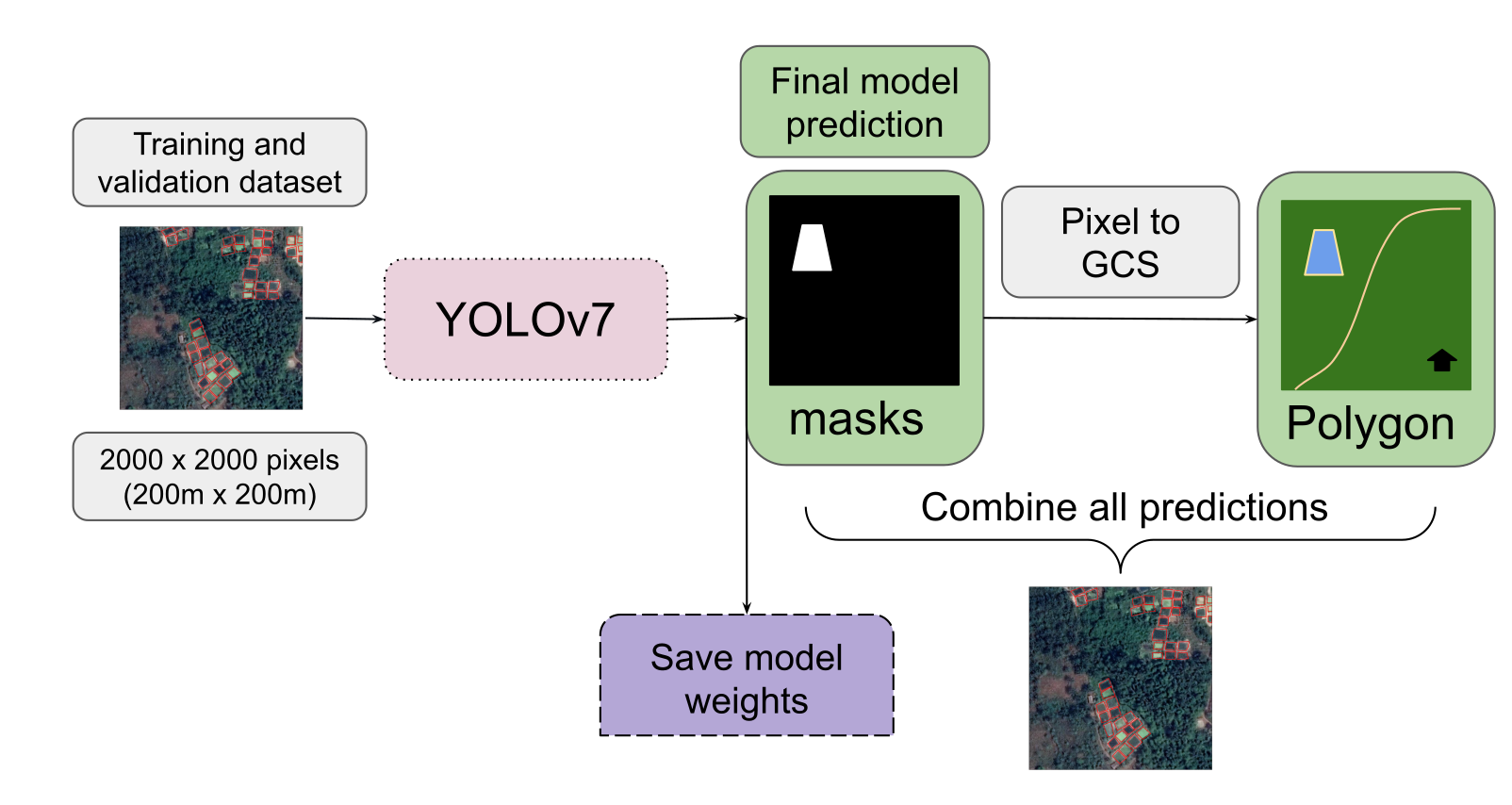
I am part of an interdisciplinary project where I am applying the YOLOv7, a computer science segementation deep learning model, to find and segment fish ponds in Nigeria.
 Google Scholar